Back to products

An optical biometer & corneal topographer with a dedicated digital workflow tool

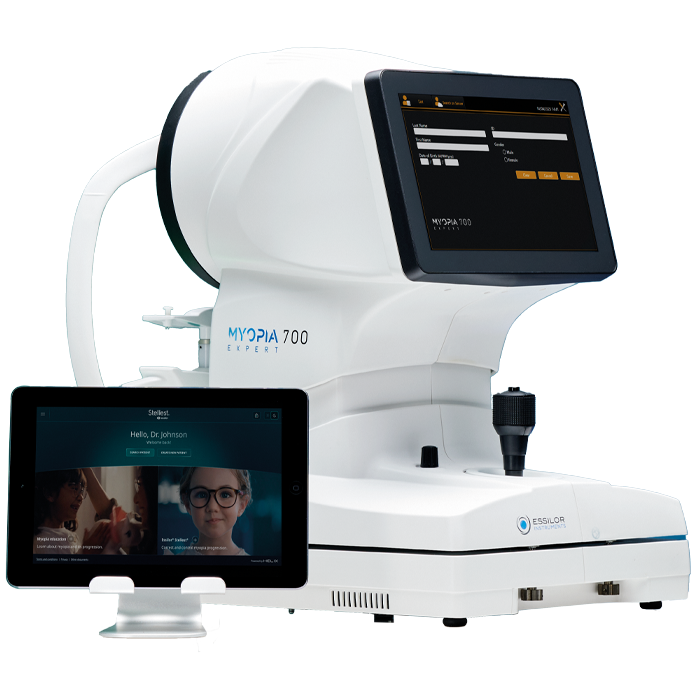
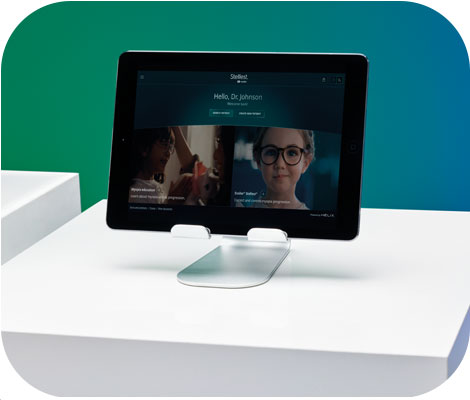
Stellest® Myopia Expert™ is composed of the Myopia Expert™ 700,
an optical biometer & corneal topographer for accurate myopia monitoring & fitting of myopia control solutions, and the Stellest® Myopia Suite™, a digital workflow tool designed to enhance myopia management at your practice¹.


Download brochure

Why Stellest® Myopia Expert?

Collect patient data to detect early myopia onset¹

Identify early myopia risk factors through a comprehensive interview and combine them with all relevant myopia data through our digital solution.

Capture multiple measurements from the Myopia Expert™ 700, and seamlessly transfer axial length data into Essilor® Stellest® Myopia Suite™.

What Myopia Expert™ 700 is capable of:

  • Corneal topography – for a comprehensive examination of the anterior corneal surface.
  • Keratometry – for a precise measurement of the central corneal radii.
  • Axial length – follow the evolution of the axial length
  • Simulated contact lens – simulated image with a large database for fitting & follow-up.
  • Pupillometry – to determine reaction times and size of pupil.
  • White-to-white measurement – for the horizontal corneal diameter measured between the borders of the corneal limbus.

Effective myopia management

Monitor myopia progression and compare axial elongation with the eye growth data through the dedicated Stellest® Myopia Suite³.

The earlier myopia progression is controlled, the less likely it is to become more severe⁴.
International Myopia Institute (IMI) recommends a myopia follow-up exam every 6 months⁵.

27 µm – the in-vivo repeatibility accuracy delivered by the Myopia Expert™ 700 – provides the precision you need for effective myopia management⁶.

Promote patient education and ensure long-term follow-up

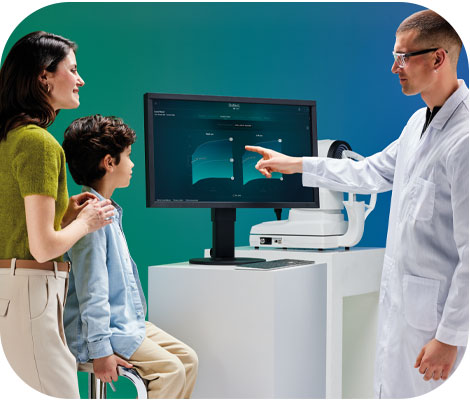
Encourage parents and children to engage in their treatment and monitoring plan by delivering a personalized Myopia Passport that can:

• Track myopia progression over time and solution effectiveness.

• Compare results alongside eye growth data⁷.

• Show personalized charts to enhance dialogue with patient and parents.

• Provide dedicated prescriptions and recommendations.

• Set follow-up visits.

Take a holistic approach in your Myopia Care. A genius innovation to slow down myopia progression. Essilor Stellest lenses slow down myopia progression by 67% on average⁸.

Associated Product

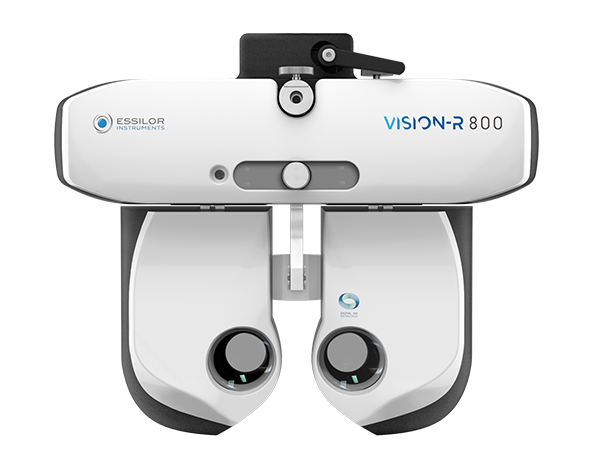
Vision-R® 800

High-resolution smart phoropter

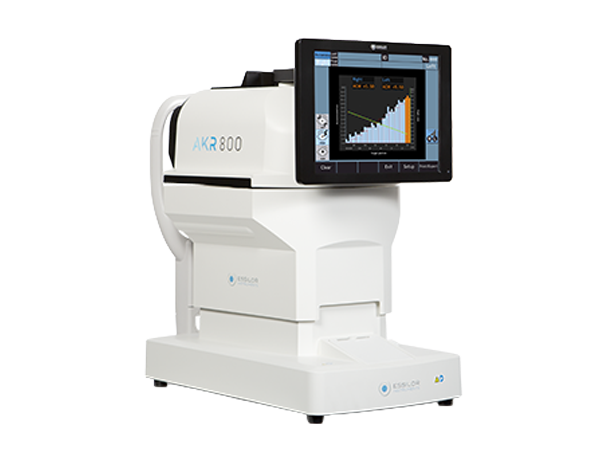
AKR 800NV

The AKR that goes beyond​
conventional objective refraction

Disclaimers:
*The SME is only available to 13 countries: Portugal, Spain, UK, France, Germany, Austria, Belgium, Netherlands, Luxembourg, Denmark, Norway, Finland and Italy.

1. Visia Imaginig (2021). ANNEX 18_7 Statistical Report. Data on file. ​ 

2. Essilor International, as co-controller of your data, implements technical and organizational measures to protect you and your data and to allow your practitioner to protect your Personal Data against unauthorized alterations, deletions or access.
3. Tideman JWL, Polling JR, Vingerling JR, et al. Axial length growth and the risk of developing myopia in European children. Acta Ophthalmol. 2018;96(3):301-309. doi:10.1111/aos.13603.
4. Sankaridurg, P., 2015. A less myopic future: what are the prospects? Clin Exp Optom, 98 (6), 494-6.

5. Gifford KL, Richdale K, Kang P, Aller TA, Lam CS, Liu YM, Michaud L, Mulder J, Orr JB, Rose KA, Saunders KJ. IMI–clinical management guidelines report. Investigative ophthalmology & visual science. 2019 Feb 28;60(3):M184-203.
6. Visia Imaginig (2021). ANNEX 18_7 Statistical Report. Data on file.  ​
7. Tideman JWL, Polling JR, Vingerling JR, et al. Axial length growth and the risk of developing myopia in European children. Acta Ophthalmol. 2018;96(3):301-309. doi:10.1111/aos.13603.
8. Compared to single vision lenses, when worn 12 hours per day every day for two consecutive years; Bao J, et al. Spectacle lenses with aspherical lenslets for myopia control vs single-vision spectacle lenses: a randomized clinical trial. JAMA ophthalmology. 2022;140(5):472-8. doi:10.1001/jamaophthalmol.2022.0401.